
Money plays a big role in determining who can access art, but being familiar with the art world also makes a difference. Experienced collectors often have advantages like access to private sales, early information, and connections that help them find new artists.
For newcomers, the challenge may be knowing where to look, whom to approach, and what to ask about an artwork's medium, condition, or documentation. The first barrier is not always the price of an artwork; sometimes, it is not knowing how to enter the conversation.
Well, there are different ways to begin. Editioned prints and photographs, for instance, can offer opportunities to collect an artist's work without purchasing a unique painting. Limited editions are produced in predetermined quantities, although artists' proofs and hors commerce impressions may exist separately. Edition numbers, signatures, production techniques, and provenance help establish what a collector is acquiring.
Works on paper, ceramics and smaller-scale pieces offer other possibilities, but a smaller format does not automatically mean a lower price, just as rarity alone does not determine artistic significance.
Digital platforms and online galleries have transformed the way people find contemporary art by allowing artists' work to be seen beyond the major cities where big galleries and art fairs are usually located. For someone who is just starting to collect art, this can lead them to discover artists they might not have found otherwise.
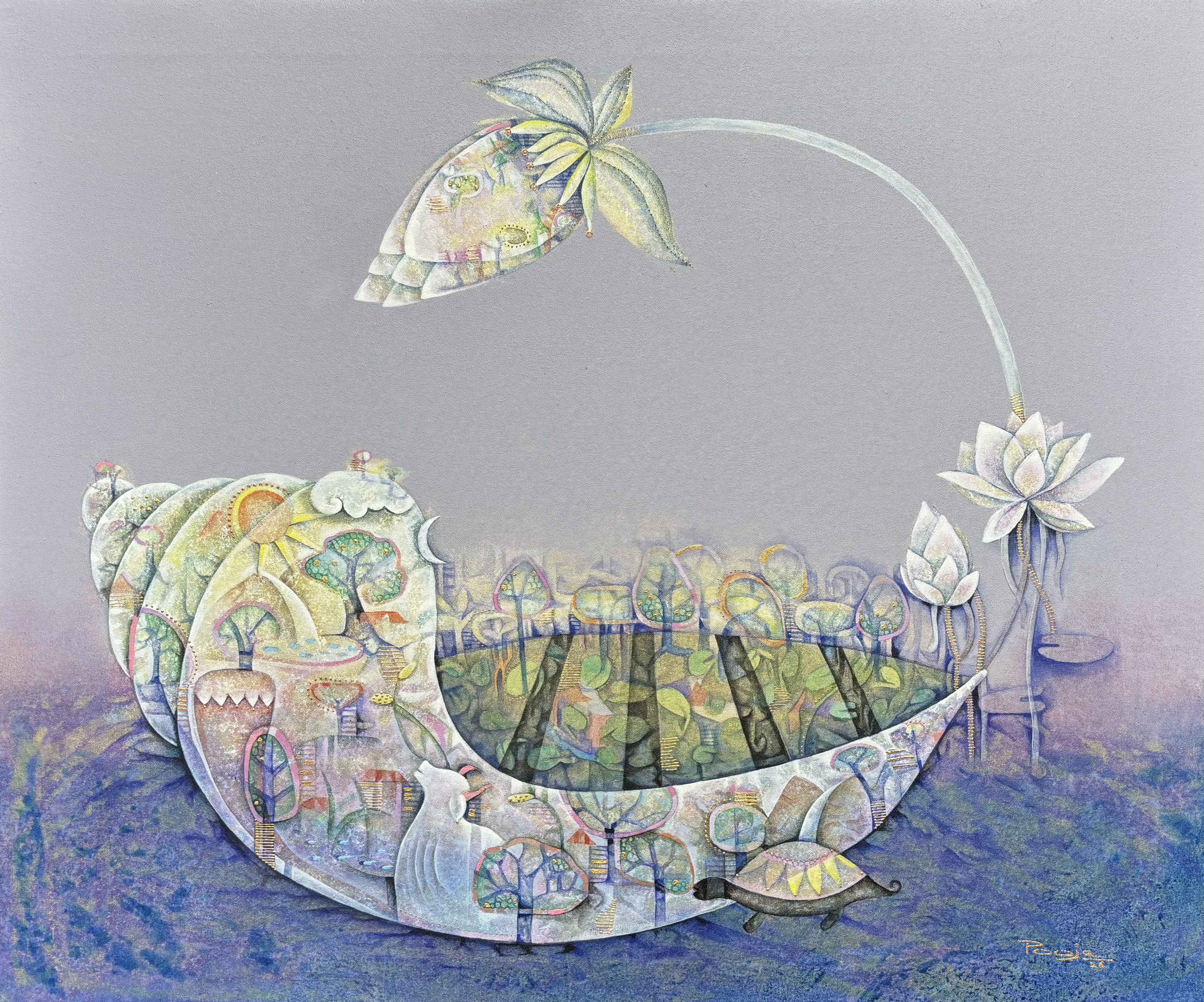
For example, Pooja Mhatre's work at The Gall combines elements of mythology with the natural world. A collector interested in these themes might start by looking at a specific piece, then slowly become more interested in the broader ideas and visual style that the artist uses. In this way, collecting doesn't have to start with a deep understanding of the art market. It can begin with an encounter that prompts someone to look closer.
Collecting also involves a question of value. An artwork may become more sought after, but future market appreciation is never guaranteed, and resale depends on finding a buyer willing to pay the expected price.
Following an artist's practice, supporting their work, or finding meaning in an artwork gives us a different reason to collect than purchasing in anticipation of profit. The more important question is not how much money defines a collector, but what leads someone to start collecting in the first place.
A collection need not begin with wealth or expertise. It can begin with curiosity, and with the willingness to keep looking.